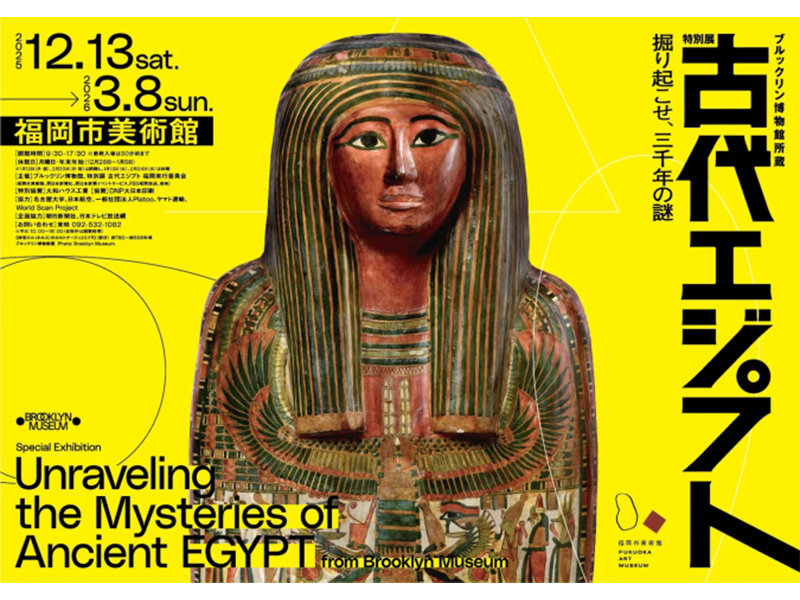
Must-see! "Highlights from the curator" of the "Brooklyn Museum Collection: Ancient Egypt" (Fukuoka Art Museum)
We asked a special person to tell us about the highlights of the currently running "Brooklyn Museum Special Exhibition: Ancient Egypt"!
Hot Topic! "Brooklyn Museum Collection: Ancient Egypt Special Exhibition" (Fukuoka Art Museum) running until March 8th
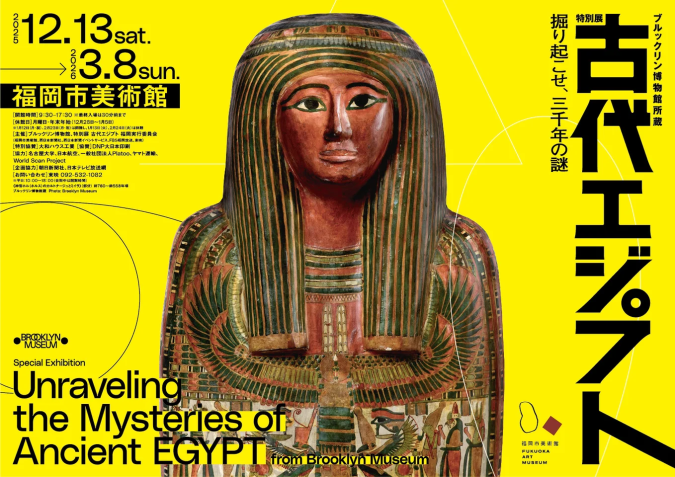
The "Brooklyn Museum Collection: Special Exhibition: Ancient Egypt" is currently being held at the Fukuoka Art Museum in Ohori Park, Chuo Ward, Fukuoka City, until Sunday, March 8, 2026.
Approximately 150 selected masterpieces from the Brooklyn Museum's proud ancient Egyptian collection will be gathered at the Fukuoka Art Museum.
The exhibition is attracting attention for its intellectually stimulating appeal, unraveling the activities of the people who created a culture so advanced it surpasses our imagination, and showcasing everything from previously overlooked "facts that we think we know but don't" to the results of research into pyramids using the latest technology.

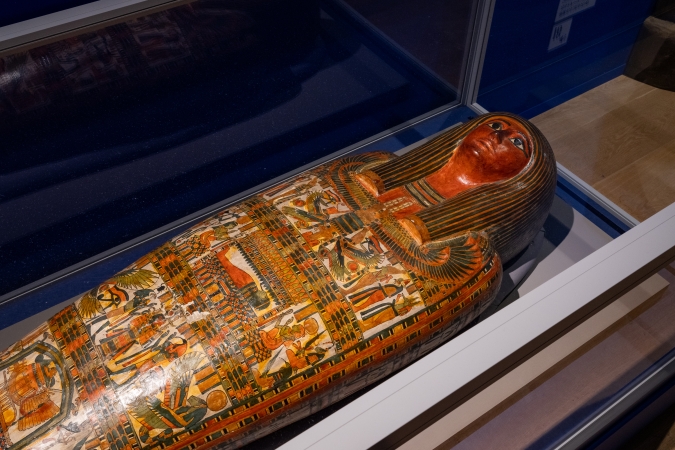
"Cartonnage and Mummy of the Priest Hor (Horus)" (detail) circa 760-558 BC Brooklyn Museum Photo: Brooklyn Museum
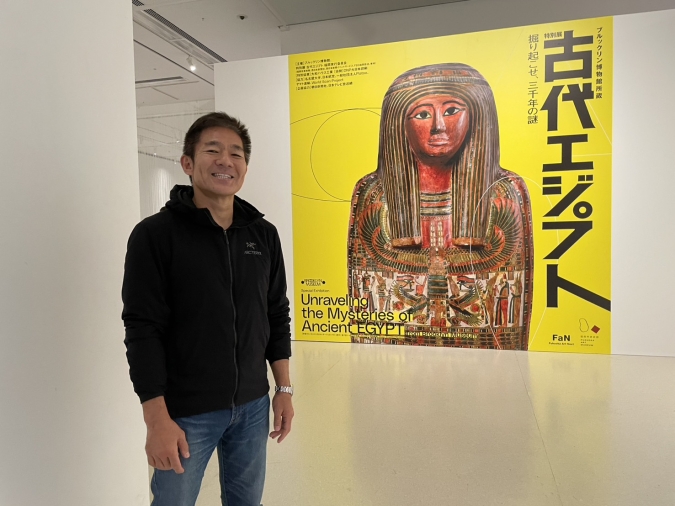
Introducing the highlights! The person who will be explaining this will be none other than archaeologist Kawae Yukinori, who is supervising the exhibition.
This time, we spoke to Egyptian archaeologist Yukinori Kawae, who supervised the exhibition, about the highlights of the "Brooklyn Museum Special Exhibition: Ancient Egypt."

Image: ARNE
Profile of Kawae Yukinori: Egyptian archaeologist and professor at the Center for Digital Humanities and Social Sciences Research Promotion, Nagoya University. He lived in Cairo from 1992 to 2008. He graduated from the Department of Egyptology at the American University in Cairo. In 2012, he received his PhD in history from Nagoya University. He has been involved in a variety of archaeological surveys for over 20 years, including 3D measurement surveys of the Step Pyramid of Saqqara, the Great Pyramids and Sphinx of Giza, and the Abusir Pyramid Complex, as well as the excavation of "Pyramid Town" and the smaller pyramids of Shinki. In 2016, he was selected as an Emerging Explorer by the National Geographic Society.
1st stage: "Solve the mystery of the ancient Egyptians!"
First, let's start with the first stage, "Solve the Mystery of the Ancient Egyptians!" This is a zone displaying a collection that gives a glimpse into the daily lives of the people of ancient Egypt, who had already built an advanced civilization 5,000 years ago.
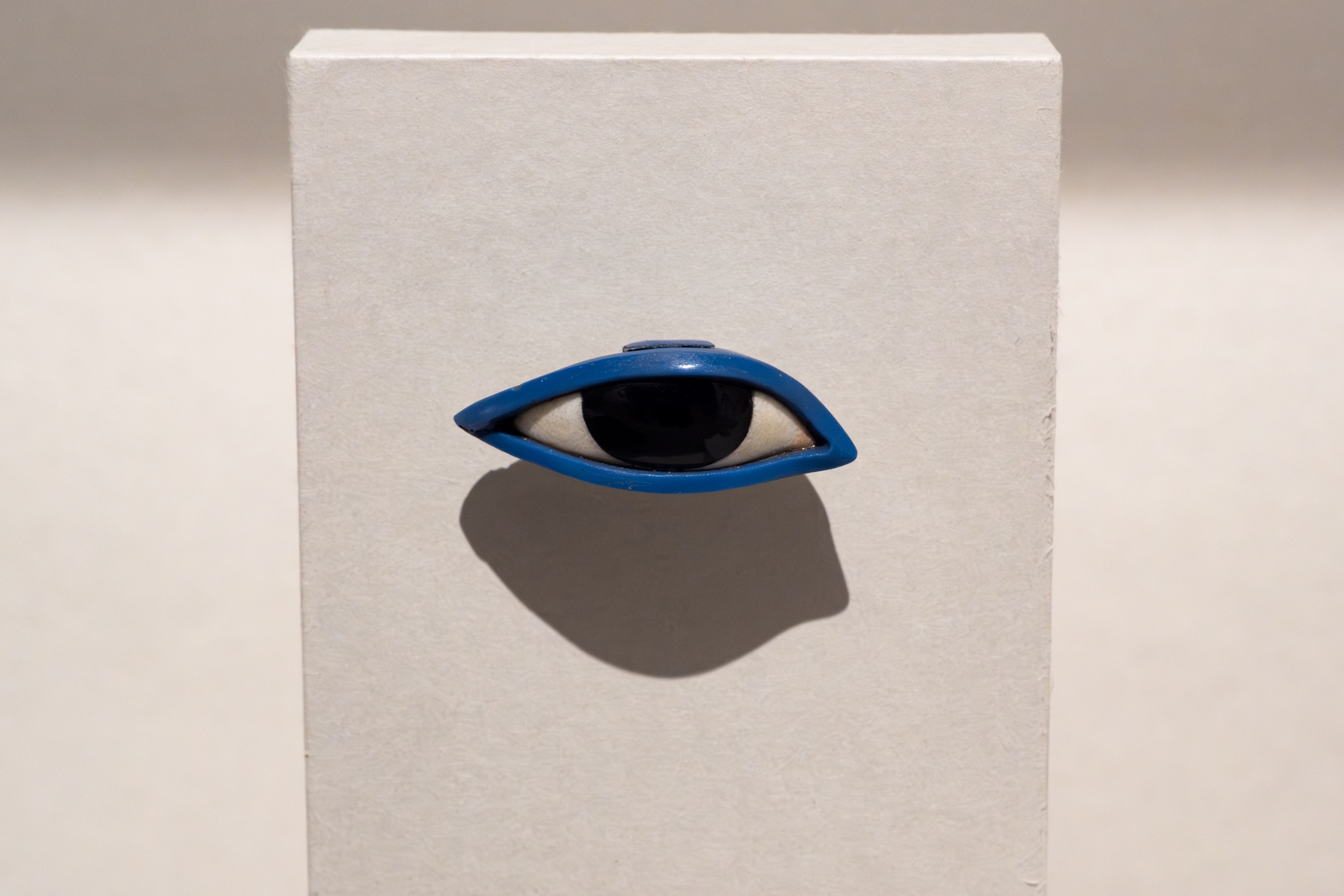
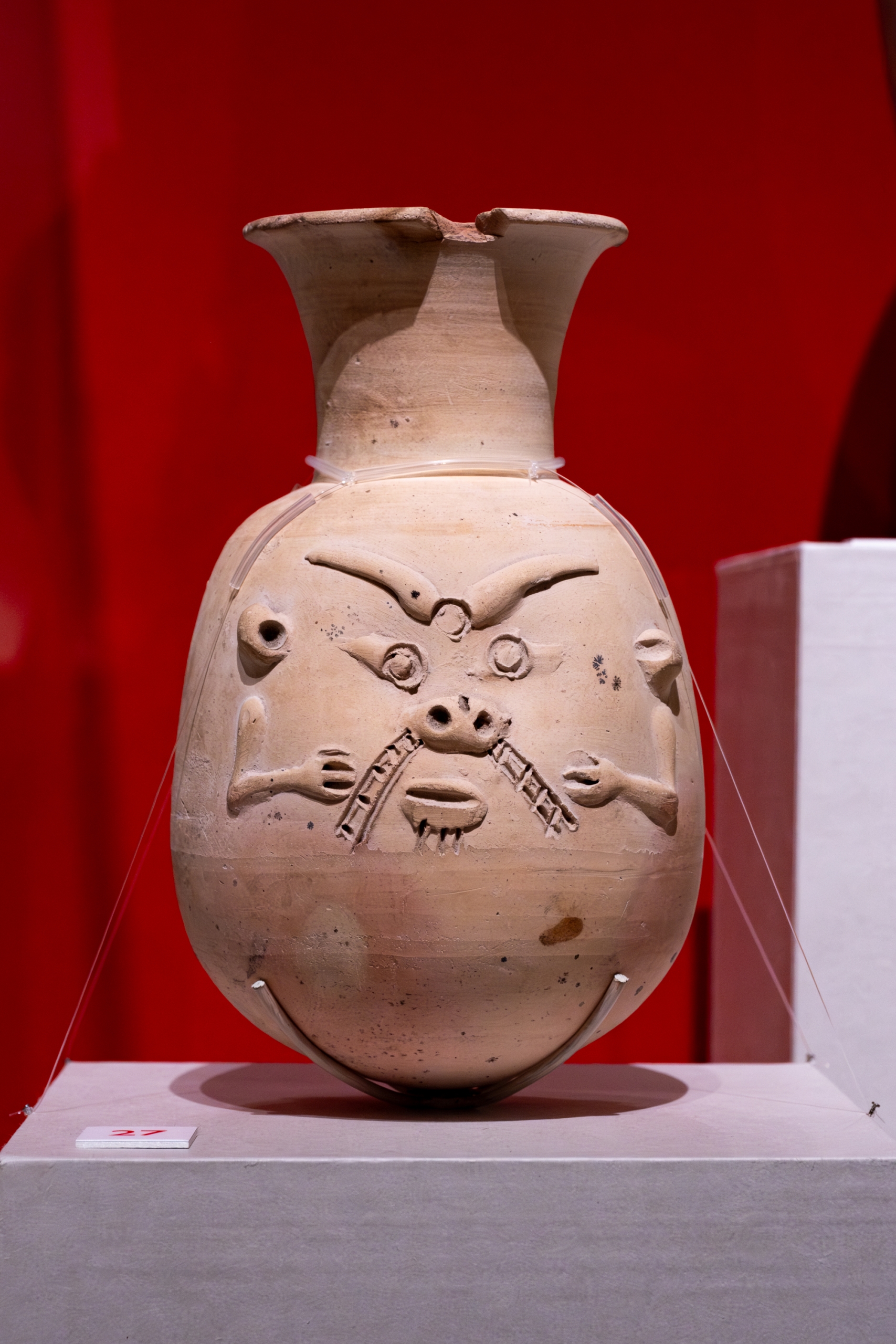
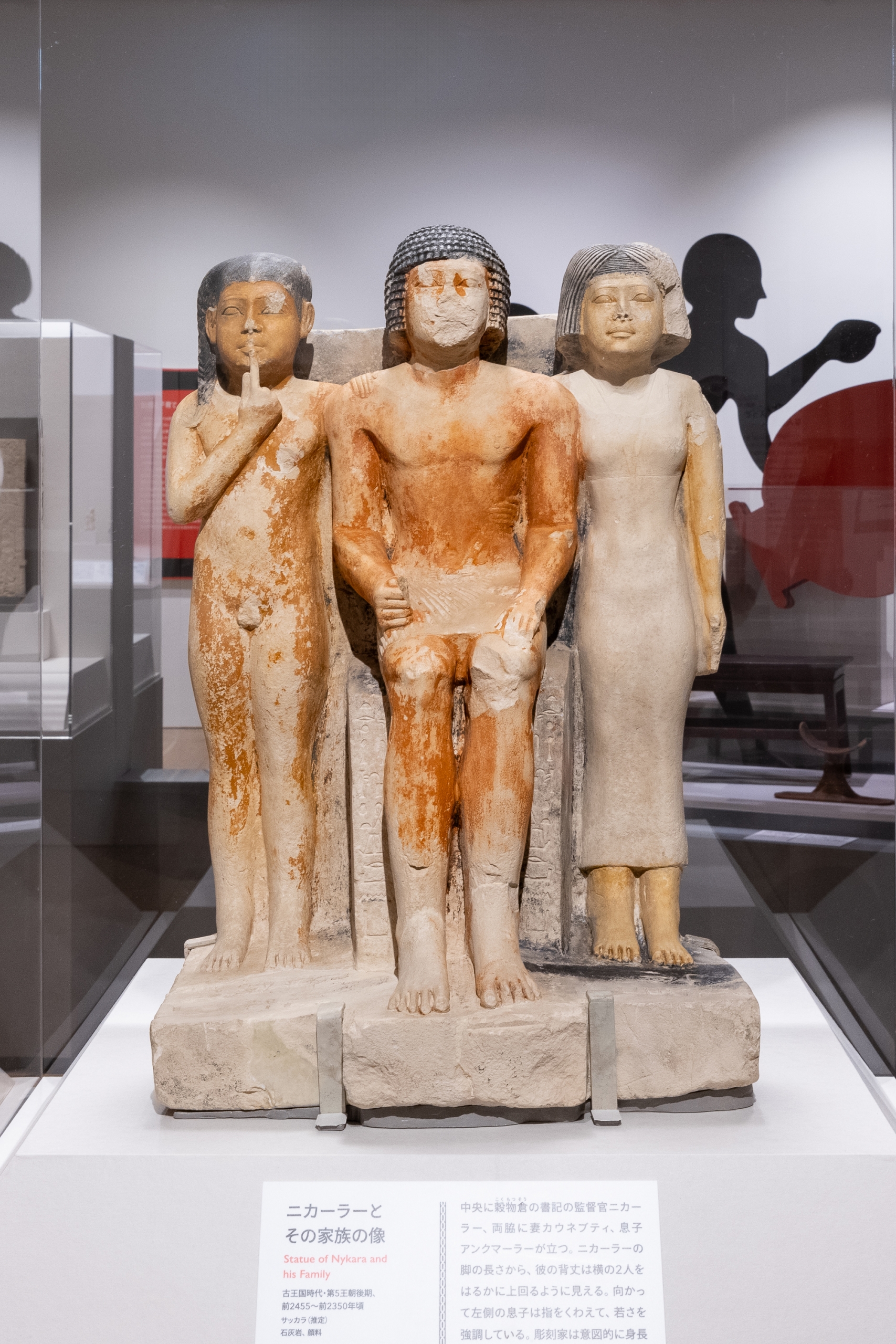
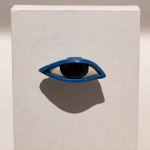
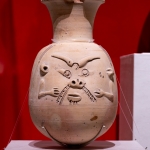
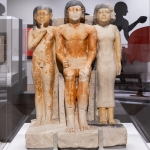
*From left to right: "Right Eye of the Human Coffin" circa 1539-30 BC, Brooklyn Museum; "Vase with the Face of the God Bes" circa 522-332 BC, Brooklyn Museum; "Statue of Nikara and His Family" circa 2455-2350 BC, Brooklyn Museum
-What would you like us to pay particular attention to in this zone?
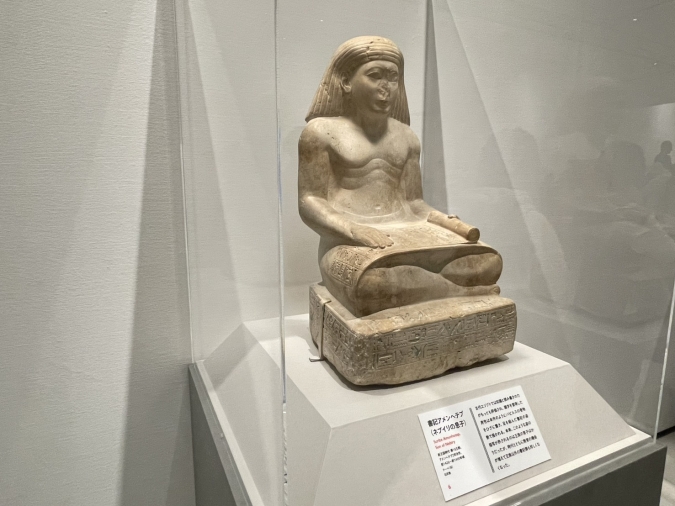
Immediately at the entrance, there is an exhibit of a seated statue of a scribe, the most popular profession in ancient Egypt, as well as the pens used by scribes and ostraca (pieces of pottery and limestone) that served as notepads. These items were used in different times and places, and it is unique to this special exhibition that they are all displayed under the theme of "writing," transcending the boundaries of time.

Image: ARNE *《Scribe Amenhotep (son of Nebuiri)》 1426-1400 BC
You can also learn about ancient Egyptian nighttime culture from reliefs depicting the state of an ancient Egyptian bedroom and wooden pillows dating back approximately 3,500 years.
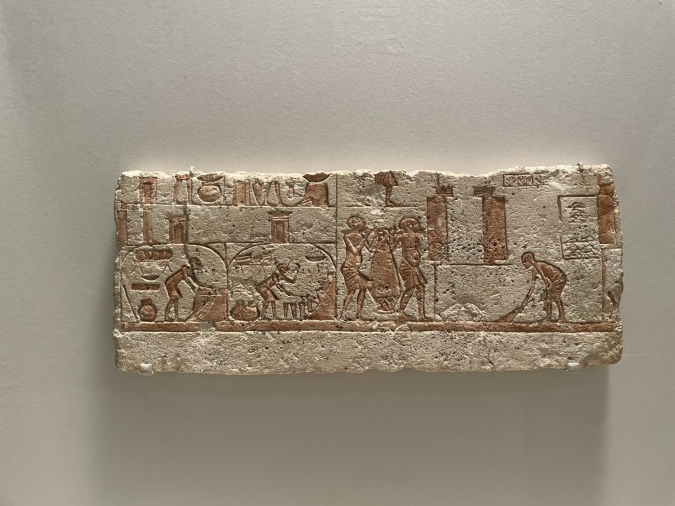
Personally, I would like you to see the reliefs of the royal palace where King Tutankhamun (c. 1336 BC - 1327 BC) actually lived when he was a prince.

Image: ARNE * Relief of the Royal Palace Kitchen, circa 1353-1336 BC
The round frame on the left is a bread baking workshop, and the fish-shaped object in the middle is a wine jar. In fact, around 30 wine jars were discovered in King Tutankhamun's tomb, and just like modern wine, they were inscribed with information about the age, origin, and who made them. This suggests that wine was not just a special burial item found only in tombs, but was a luxury item that was consumed on a daily basis.
-After passing through the zone introducing daily life, there is a section about the latest research in Egypt.
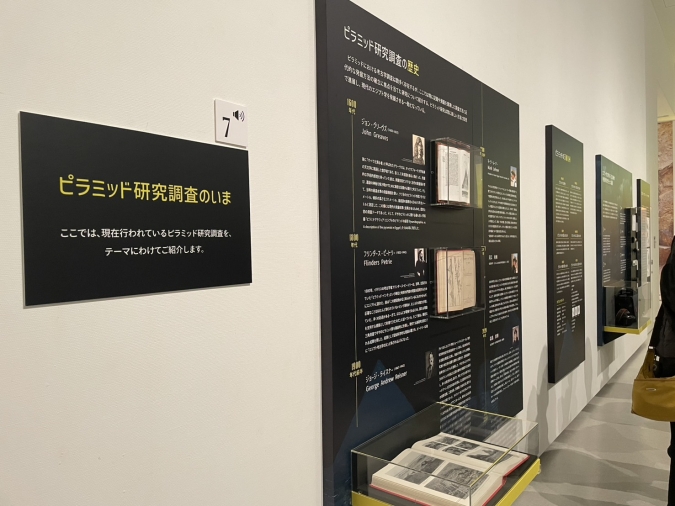
Here you can learn about the history of pyramid research, and the research using cosmic ray muons (elementary particles that rain down from space) to clarify the structure and construction methods of the pyramids. My excavation tools are also on display.

Image: ARNE
2nd Stage: "Uncover the true nature of the Pharaoh!"
Next up is the 2nd Stage, "Uncover the True Identity of the Pharaohs!", where you can learn about the history of kings over 3,000 years. Thiswill introduce a collection related to 12 kings who were active throughout 3,000 years of dynastic history, from the Predynastic Period to the Ptolemaic Period, including Pharaoh Khufu and Ramses II, and trace the lives of the kings and the changes in the dynasty.
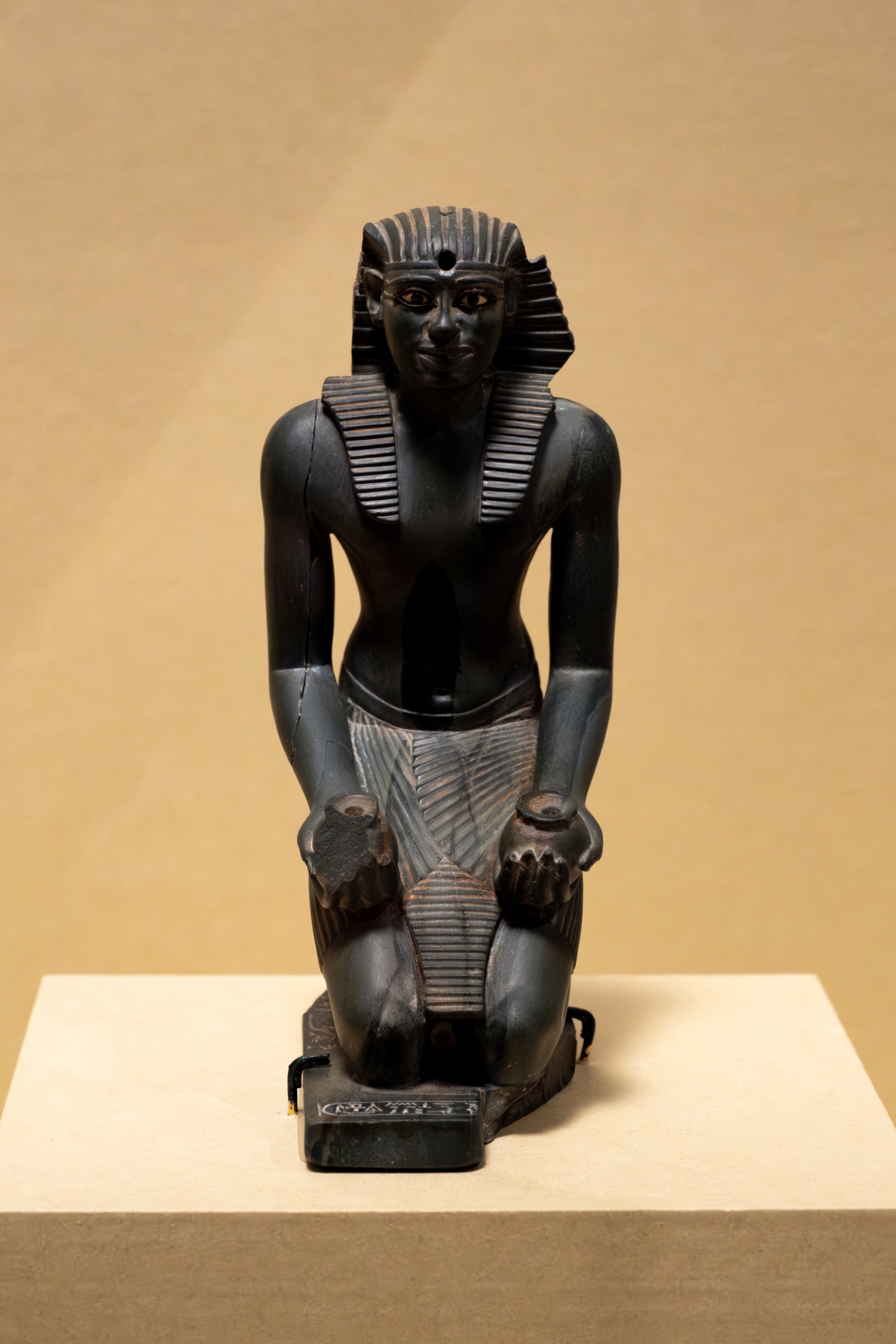
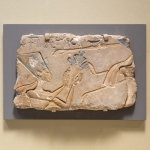
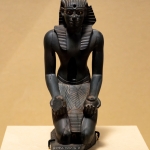
*From the left in the photo: "Relief of Queen Neferetiti (Nefertiti)" circa 1353-1336 BC, Brooklyn Museum; "Statue of Kneeling Pepi I" circa 2338-2298 BC, Brooklyn Museum
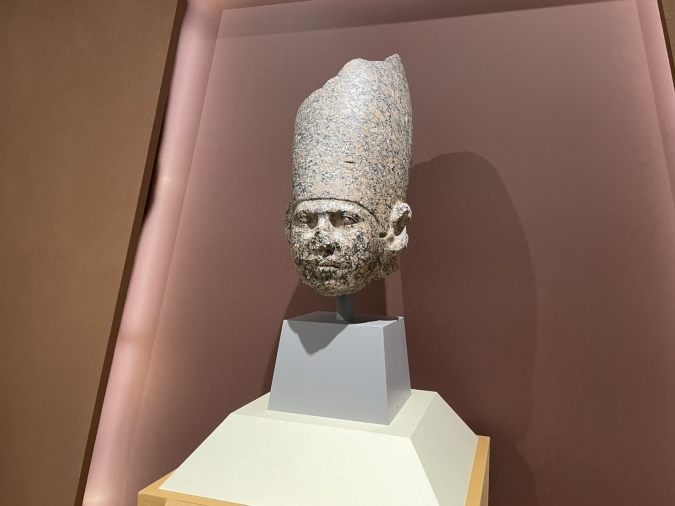
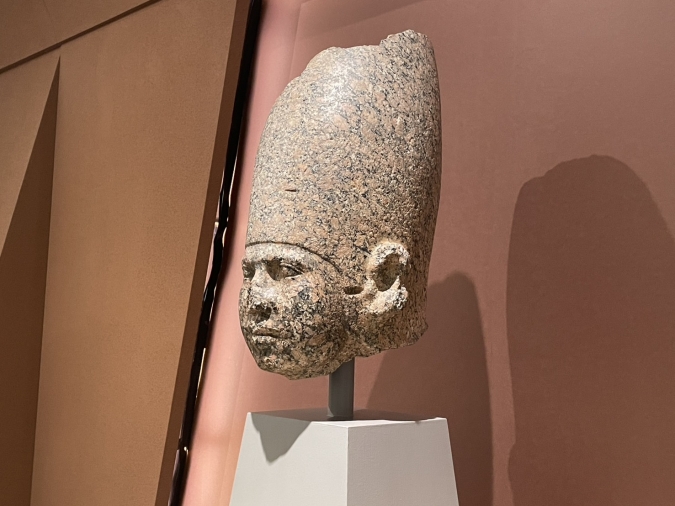
What we want you to pay attention to is the statue of the head of a king who is said to be King Khufu, who built the Great Pyramid.

Image: ARNE * Head of a King, circa 2650-2600 BC
The only known head discovered to date that is confirmed to be that of King Khufu is a seated ivory statue measuring approximately 7.3 cm, discovered in Abydos. If this head is that of King Khufu, it would be the largest. There were no statues this large at the time, and it is one of the oldest life-size statues.
-What about this head of a statue tells you it's a king?
The statue can be identified as a king by its ornaments. It is known to be a royal statue because it is wearing a white crown, and from an art historical perspective, the facial expression is typologically inferred to be from the early Old Kingdom period. In addition, the thick and square tabs on the crown (the hanging part on the side of the crown) suggest that it may be King Khufu.

Image: ARNE * Head of a King, circa 2650-2600 BC
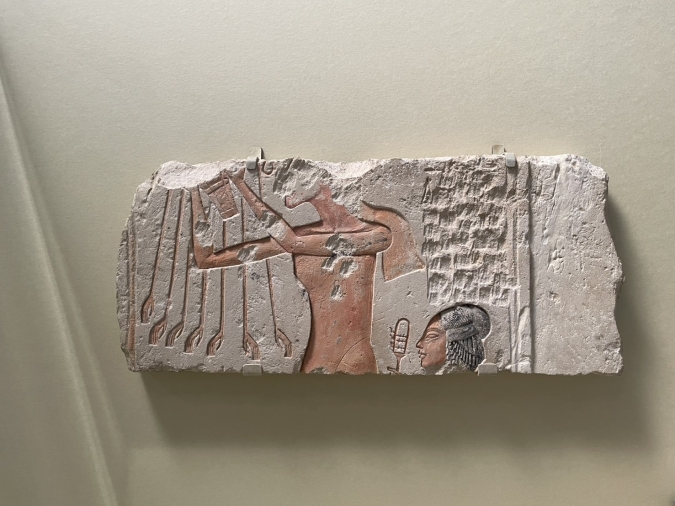
Another highlight is the Amarna period, during which Tutankhamun lived. This is a unique period in Egyptian history, as it saw a shift from polytheism to monotheism and then back to polytheism.
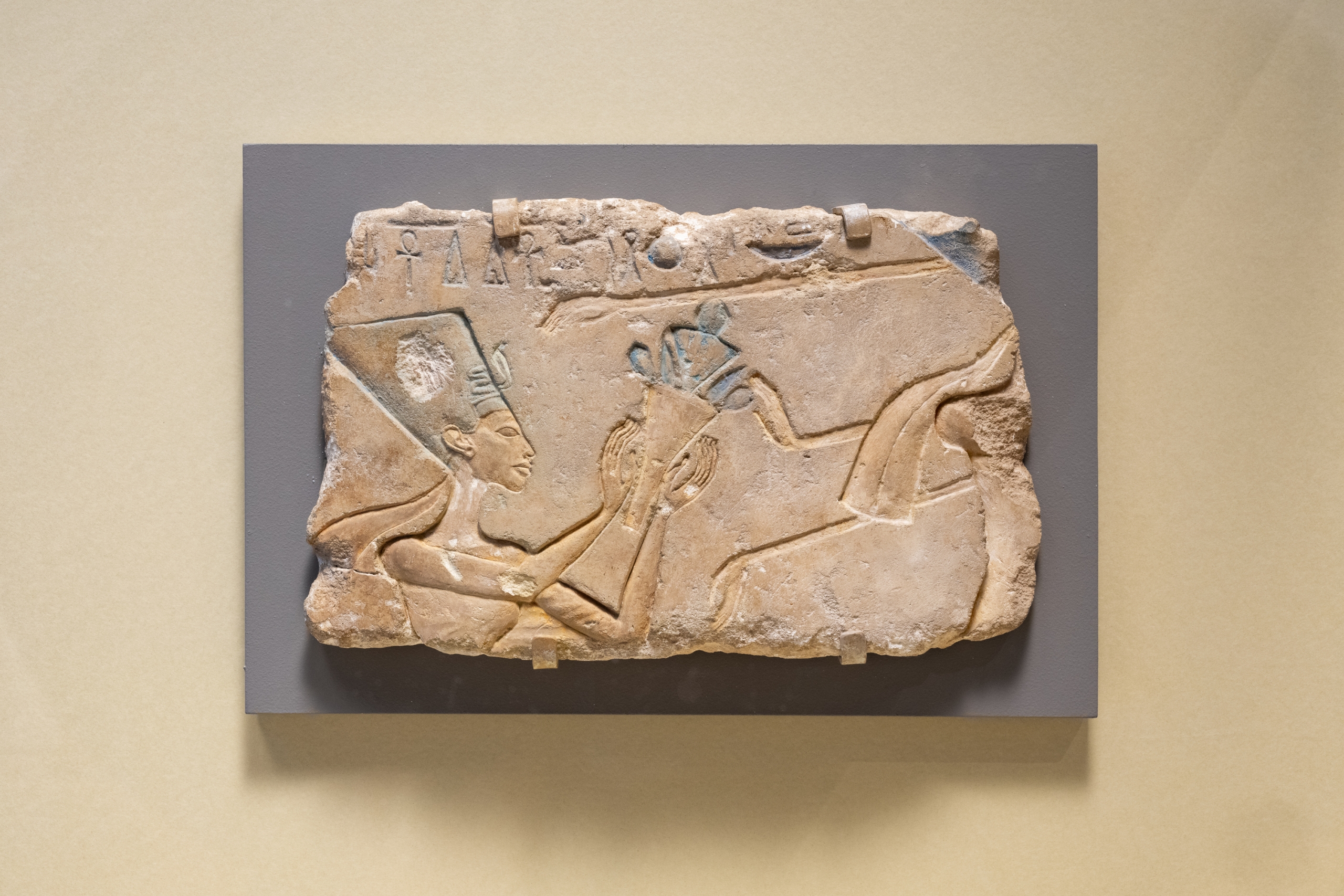
The relief in the picture below shows how they worshipped the one and only god, Aten, the sun-disk god. Tutankhamun's father offers a bouquet of flowers, and Akhenaten's daughter holds a sistrum (an ancient Egyptian musical instrument). The scene depicts the sun's rays shining down on the kings, and Aten bestowing blessings on the royal family.

Image: ARNE * Relief of King Akhenaten and his daughter making an offering to the god Aten, circa 1353-1336 BC
Akhenaten changed from polytheism to monotheism (through religious reform), but when the religion returned to polytheism, Akhenaten's existence was erased. (In the photo above, you can see that the king's name and face have been chiseled off the relief. Ancient Egypt sought eternity, and it was important to remain forever, so chiseling off a name or face was one of the most severe posthumous punishments.
Final Stage "Knock on the gates of the afterlife!"
- The final zone displays items related to funeral rituals, including human and animal mummies, beautiful grave goods, funeral implements, and reliefs depicting gods.
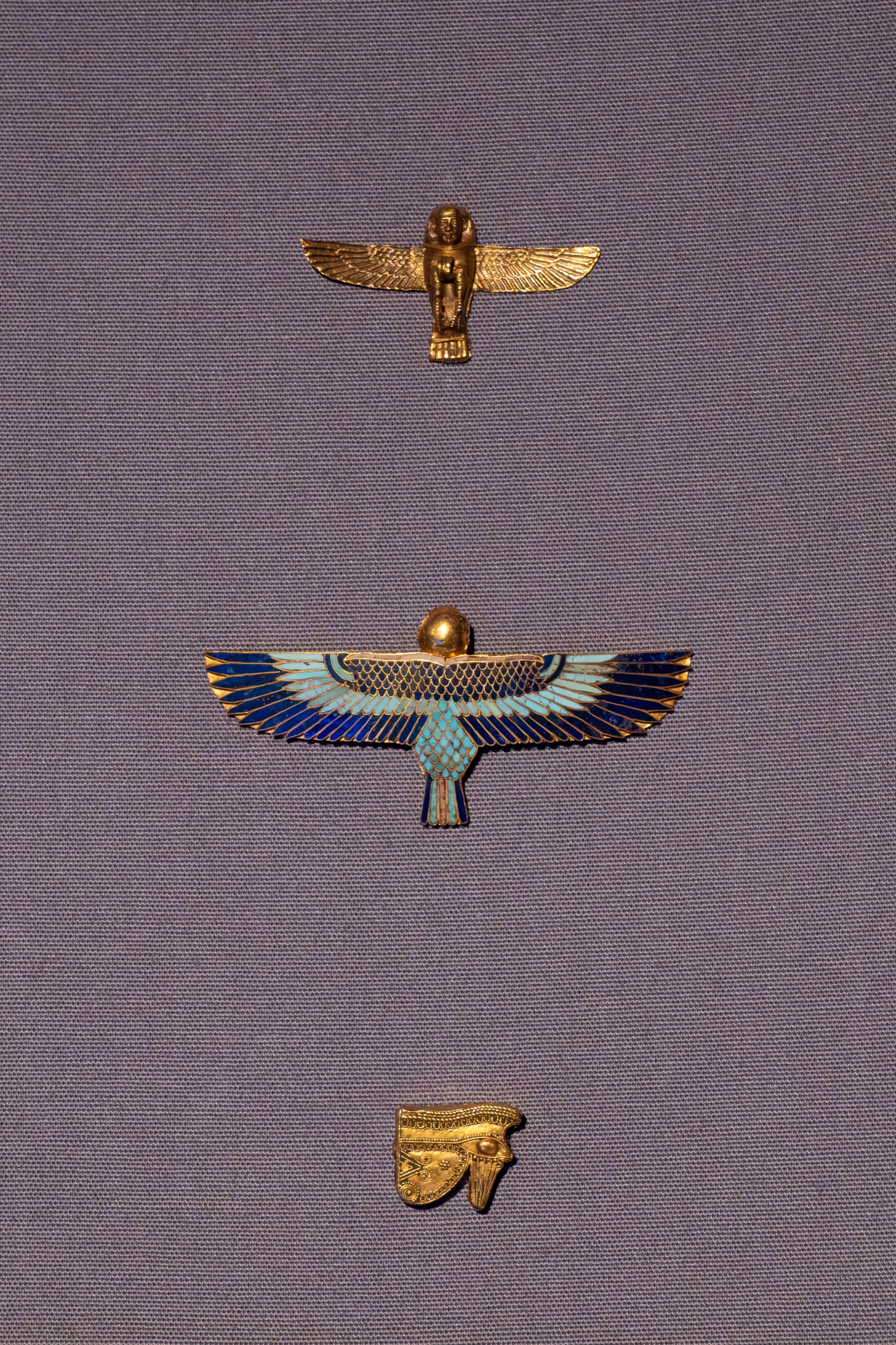
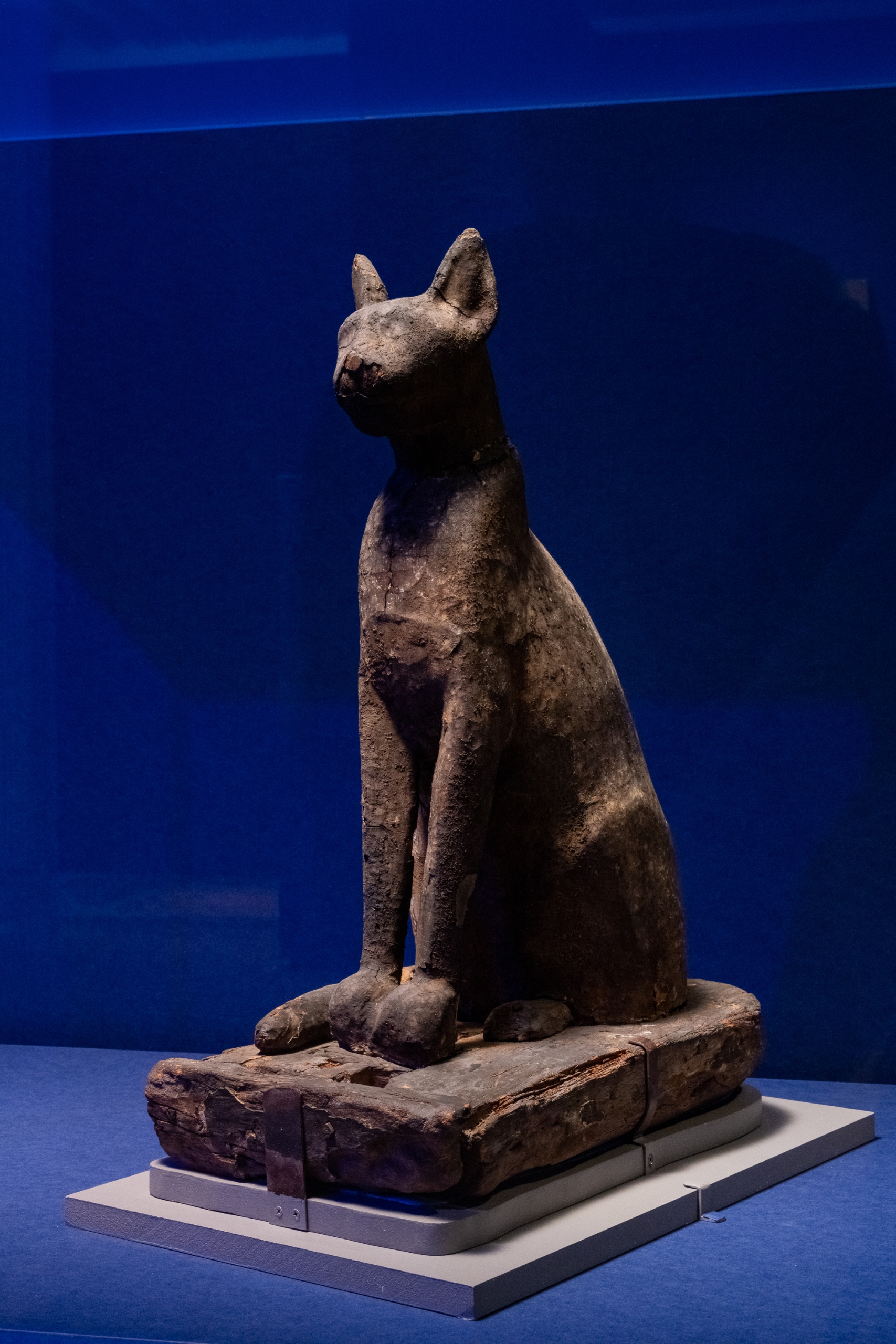
*From the left in the photo, "Ba Amulet Representing a Bird with a Human Head" (top) probably 305-30 BC, Brooklyn Museum, "Coffin and Mummy of a Cat" 664-332 BC, Brooklyn Museum
-Why is this hippo statue displayed upside down?

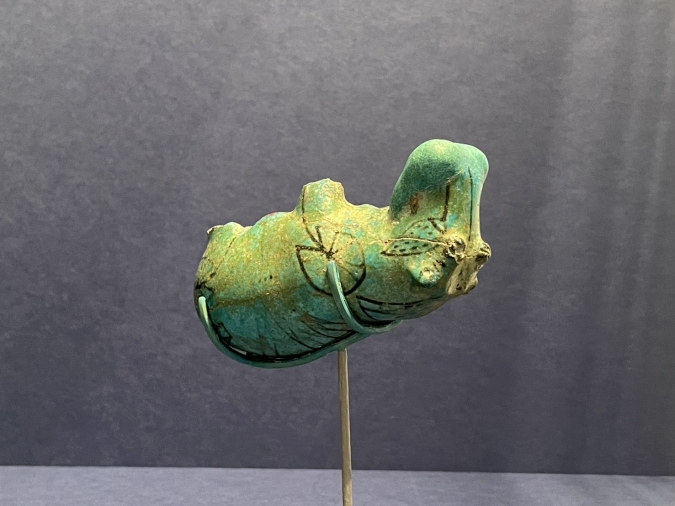
Image: ARNE *"Hippopotamus Statue" (c. 1938-1539 BC)
Hippos were a symbol of fertility in Egypt, and were buried with the dead to protect their souls. However, because hippos are strong animals, they were deliberately placed in tombs with their legs broken to prevent them from moving around in the tomb and injuring the dead. This is on display in a way that makes it easy to understand.
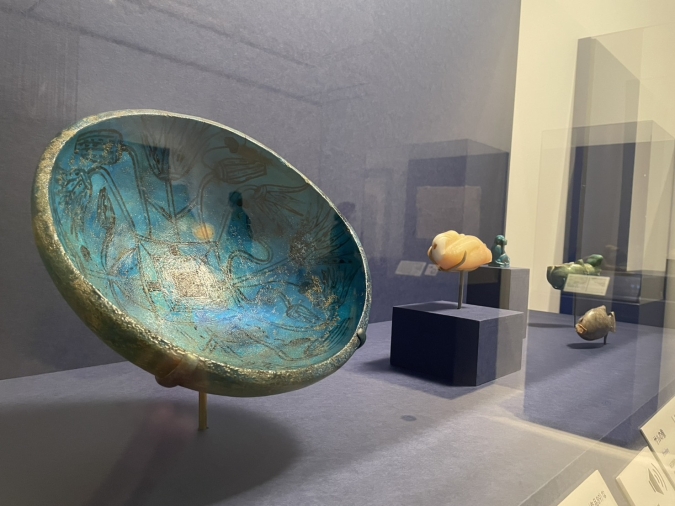
The blue color of hippopotamus was artificially created by the ancient Egyptians. At the time, the lapis lazuli used for dyeing blue had to be imported, so an artificial blue was created by mixing silica (quartz sand), copper oxide, coal, etc., and used for statues and plates, such as those on display.

Image: ARNE * Plate depicting Nun (primordial sea) circa 1539-1493 BC and others
It was a time of great technological advancement.
The Middle Kingdom saw a remarkable development in technical skill, with beadwork becoming more delicate.
During the Late Period, grave goods changed from everyday items to items related to funerary and ritual use in the afterlife.
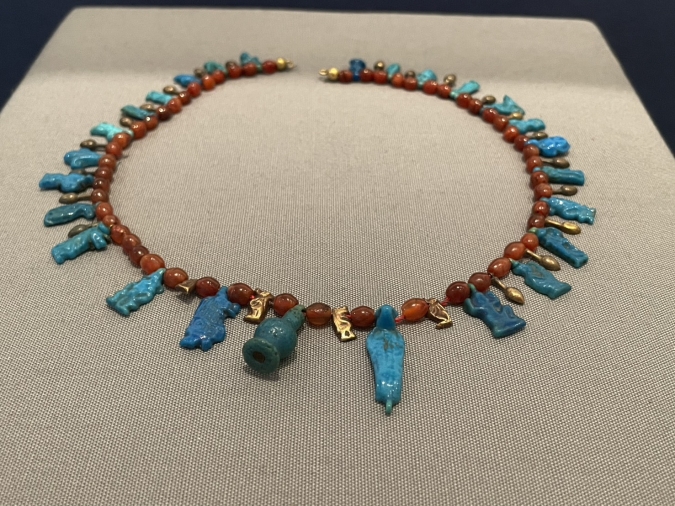
These necklaces and bracelets, decorated with images of the gods Bes, Taweret, and scarabs, were buried with the dead as amulets for protection.

Image: ARNE * Necklace with pendants of the gods Bes and Taweret, c. 1539-1292 BC
-As I walked through the venue, I heard a spell.
It's interesting, isn't it? In a study to reconstruct the sounds of ancient Egyptian hieroglyphs, Professor Hajime Miyagawa of the University of Tsukuba recorded the sounds and suggested that "this is probably how it was pronounced."
The exhibition features excerpts from the Pyramid Texts, the oldest surviving funerary documents, and is a new attempt to allow visitors to enjoy Egypt not only visually but also aurally.
- Also on display are coffins containing mummies and canopic jars used in mummification.
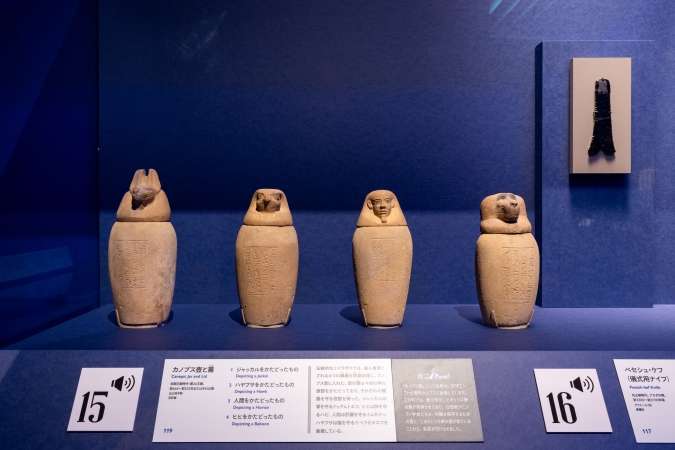
The Great Pyramid era, about 2,500 years ago, saw innovations not only in the construction of gigantic structures, but also in the creation of mummies. Essential human organs were removed, soaked in natron (natural salt), and placed in canopic jars.

Canopic jars and lids (from left: jackal, falcon, human, baboon) - all from 664-525 BC or later
However, there is a certain human element to this, and there was a good balance between good and bad in mummification. Proper mummies were made by removing the internal organs and soaking them in natron, which took a long time, but in simple mummies, a canopy was simply prepared and the internal organs were not removed. The canopic jars on display were not designed to hold anything.
Let's move on to the mummy exhibition zone. Although we are not showing any mummies this time, there is a real mummy inside the cartonnage (a container made of linen and papyrus bound together with plaster) that holds a mummy. Visitors often say, "It makes me want to worship it" (laughs).
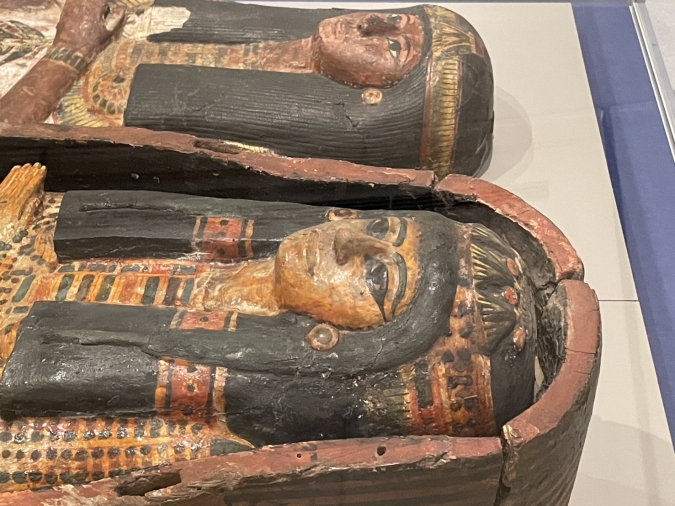
See the "Coffin and Interior Cartonnage of Weretwahaset, Mistress of the House," from the New Kingdom period.

Image: ARNE *"The coffin of Weretwahaset (mistress of the house) and cartonnage inside" (detail) 1292-1190 BC
You can see that the skin colors are different between the coffin and the mask placed inside it. Usually, men's skin was painted brown, and women's skin was painted white or yellow. A distinctive feature of the ideology of this era was the belief that in order for women to go to the afterlife, they had to first change their gender to male and then change back to female, so the face on the coffin lid is painted in male colors, and the face on the mask inside is painted in female colors.
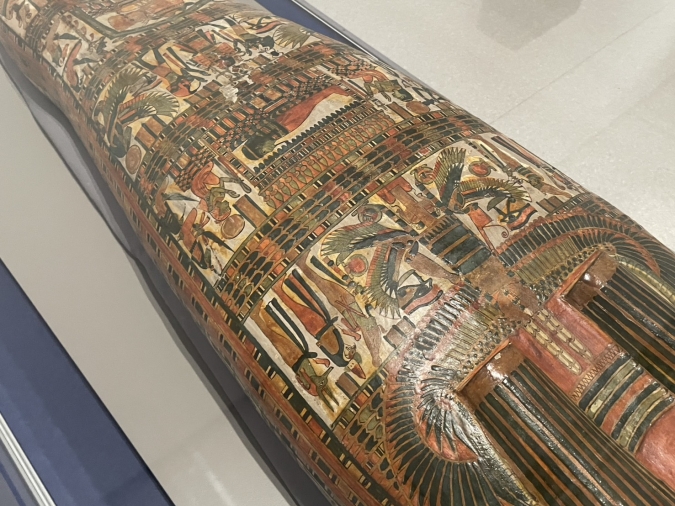
Next, let's take a look at the "Cartonnage and Mummy of the Priest Hor (Horus)."

"Cartonnage and Mummy of the Priest Hor (Horus)" c. 760-558 BC Brooklyn Museum
The coffin has a relief depicting a funeral ritual. Usually, funeral rituals were depicted on tombs, but since building tombs was expensive, during this period, they were often depicted on coffins. This is a characteristic of mummies from the Late Dynasty period.

Image: ARNE *"The coffin of Weretwahaset (mistress of the house) and cartonnage inside"(detail) circa 1292-1190 BC
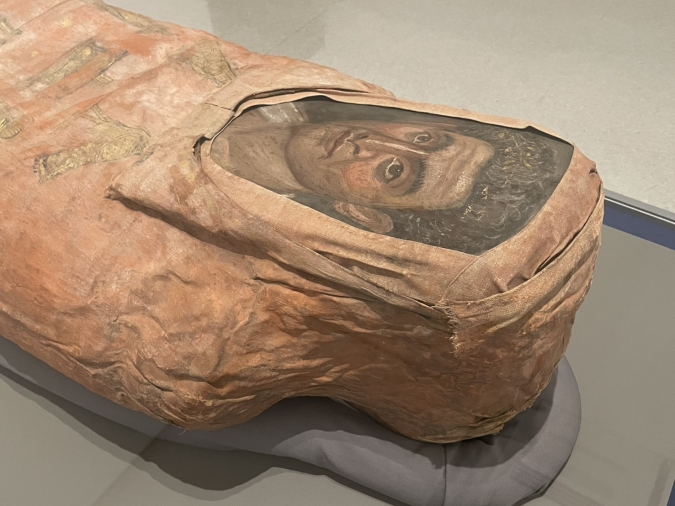
The Roman "Portrait and Mummy of a Man Named Demetrios" has a portrait of the deceased, known as a "Fayum Portrait," painted on the face. A distinctive feature of the Roman period is that it is easy to identify who the mummy is. In this way, the characteristics of each era are reflected in mummies and coffins.

Image: ARNE * Portrait and mummy of a man named Demetrios (detail) 95-100 AD
—What is the appeal of Egypt to you?
There are many different civilizations around the world, but the greatest attraction of Egyptian civilization is the amount of relics that remain. An overwhelming number of objects and buildings have survived to the present day. This special exhibition is a "gateway" to Egyptian civilization that can be enjoyed even by those who have never known Egypt before. After viewing this exhibition, we hope you will visit Egypt to experience the real Egyptian civilization.
Also check out the museum merchandise and audio guide navigation by Fuma Kikuchi!
What do you think of the highlights recommended by exhibition curator Kawae? Finally, we would like to introduce two more points of interest at the "Brooklyn Museum Special Exhibition: Ancient Egypt."
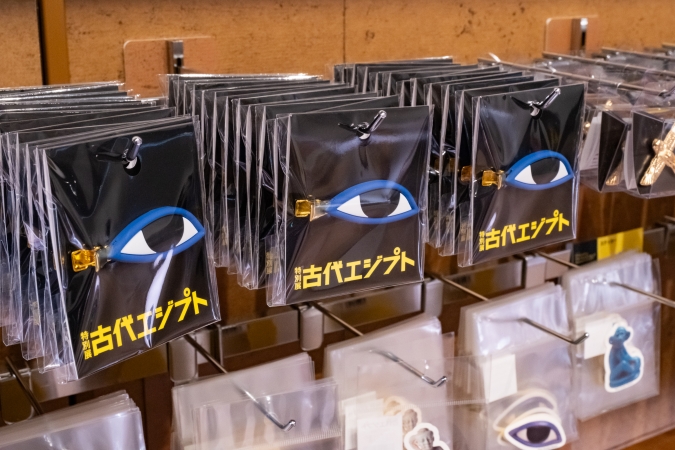
First of all, there is a huge selection of merchandise. There are a variety of wonderful items, including "PRANUTS collaboration goods" featuring Snoopy and friends in visuals unique to this exhibition, as well as unique museum goods that are perfect for bringing home the excitement of your visit (the ARNE editorial team's favorite item is the "bangs clip" shown in the photo).

*Image: Brooklyn Museum Collection Special Exhibition Ancient Egypt Fukuoka Executive Committee
The second is the exhibition's "audio guide navigator." You can choose from two types of guides: the "regular version" (rental fee 650 yen) and the "special version" (rental fee 750 yen), and the navigator for the "special version" is none other than Fuma Kikuchi! It looks like you'll be able to enjoy the experience as if you were viewing the exhibit with Kikuchi.
Be sure to come and experience the fascinating "Brooklyn Museum Collection: Ancient Egypt Special Exhibition." (Interview and photography by Tomoe Okunaga (Hokulea Publishing), written by ARNE Editorial Department)
<「ブルックリン博物館所蔵 特別展 古代エジプト」概要>
会期:2025年12⽉13⽇(土)〜2026年3⽉8⽇(日)
時間:9:30〜17:30(入館は30分前まで)
会場:福岡市美術館 特別展示室(福岡県福岡市中央区大濠公園1-6)
休館日:毎週月曜日 ※2月23日(月・祝)は開館し、2月24日(火)は休館
観覧料:一般2,000円(団体1,800円)、高校生・大学生1,500円(同1,300円)、小学生・中学生1,000円(同800円)
※ 団体は20名以上。学生の方は入場の際、 学生証等をご提示ください。※ 身体障害者手帳、 精神障害者保健福祉手帳、療育手帳、 障害者手帳アプリ 「ミライロID」の提示者とその介護者1名、および特定疾患医療受給者証、特定医療費 (指定難病)受給者証、先天性血液凝固因子障害等医療受給者証、小児慢性特定疾病医療受給者証の提示者は観覧無料 ※ 未就学児無料(ただし、保護者同伴)
プレイガイド:アソビュー!、ローソンチケット(Lコード:82811)、チケットぴあ(Pコード:687-340)、楽天チケット、ARTNEチケットオンライン ※当日券は会場でも販売(現金のみ)
主催:ブルックリン博物館、特別展 古代エジプト 福岡実行委員会
特別協賛:大和ハウス工業
協賛:DNP大日本印刷
協力:名古屋大学、日本航空、一般社団法人Platoo、ヤマト運輸、World Scan Project
企画協力:朝日新聞社、日本テレビ放送網
問い合わせ:東映 TEL092-532-1082 ※平日:10:00~18:00(会期中は開館時間)
公式サイト:https://egypt-brooklyn-fukuoka.com/index.html/(Here is the link)
*This article is current as of the time of publication. *Prices in the text include tax.
* Any secondary use of the content of this site (images, text, etc.) such as duplication, reproduction, diversion, modification, etc. without permission is strictly prohibited. If found to be in violation, legal action may be taken.
*"Brooklyn Museum Special Exhibition: Ancient Egypt"
*Interview and photography by Tomoe Okunaga (Hokulea)
#go out Check them all out!
#event #family
⇒【NEW】Click here for the latest information on Fukuoka
<Other articles you may like>
◆Easy and delicious! Popular recipes
◆Recommended by a hot spring sommelier! Day trip hot springs near Fukuoka
◆[Every Sunday] Evelourdes Haruka's Mind Number Fortune Telling