TOP > Places to visit> A must-see Afro Buddha! A guide to Kyushu National Museum's "Honen and the Pure Land" from a Level 1 Buddhist Certification Writer [Dazaifu]
九州国立博物館 法然と極楽浄土 アフロ仏

A must-see Afro Buddha! A guide to Kyushu National Museum's "Honen and the Pure Land" from a Level 1 Buddhist Certification Writer [Dazaifu]

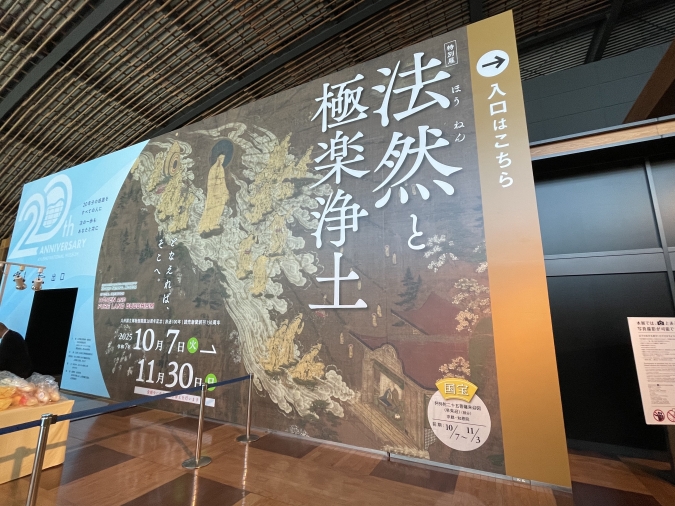
A new special exhibition will start at the Kyushu National Museum (Dazaifu City) on October 7, 2025!

This event commemorates the 20th anniversary of the opening of the Kyushu National Museum and will be one of the largest in the museum's history!

[October 7th - November 30th, 2025] Special exhibition "Honen and the Pure Land" will be held at the Kyushu National Museum (Dazaifu City)

The special exhibition "Honen and the Pure Land" will start on October 7, 2025, and run until Sunday, November 30.

法然と極楽浄土 エントランス

Image: Mr.tsubaking

However, there may be some people who think, "I'm interested, but it seems difficult" or "I don't know how to approach it."

So, I, Tsubaking, who has a "Level 1 Buddhist Examination" (※), will introduce the highlights of this exhibition in a "super simple" way, not as a study, but from the perspective of "cute!" and "amazing!" (※) Certified by the Japan Buddhist Association

What did Honen do?

I wrote that this would be a "super simple" introduction to the special exhibition and Buddhism, but in fact, Honen, whose name is also included in the title of this special exhibition, is the person who made Buddhism super simple!

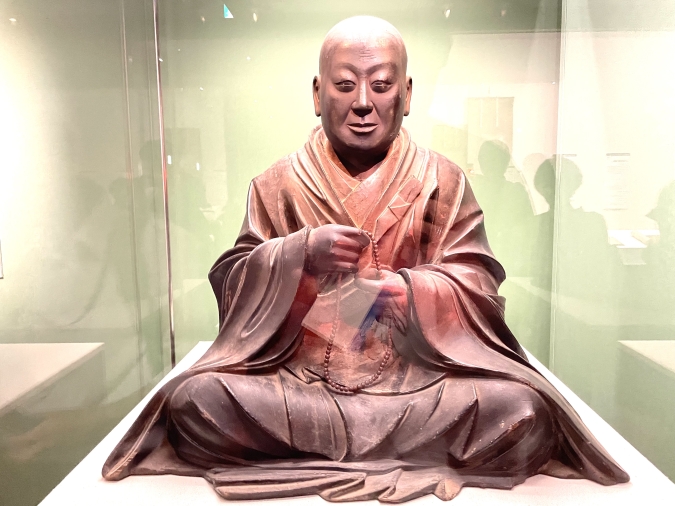
Honen and the Pure Land: Seated Statue of Honen

Image: Mr. tsubaking *Important Cultural Property "Seated Statue of Honen Shonin" Kamakura Period, Taima-dera Temple Okuin Statue

Buddhism was introduced to Japan at a time when very few ordinary people could read and write.

No matter how precious the teachings contained in the sutras were, people could not read them, be moved by them, or learn from them. For this reason, Buddhism was only available to people of high status, such as aristocrats.

It was Honen, who was active during the Kamakura period, who quickly spread Buddhism to the masses.

Honen preached the teaching that "You will be saved if you chant 'Namu Amida Butsu' many times!" and founded the Jodo sect.

"To be saved" here means that when you die, Amida Buddha will come to welcome you and take you to the Pure Land.

Unlike previous forms of Buddhism, this style did not require monkhood or training, but simply involved chanting "Namu Amida Butsu" many times, and it quickly spread throughout Japan.

Amitabha is the owner of the Pure Land

Amida Buddha, who Honen said would "take you to the Pure Land," is the head priest (like an owner) of the Pure Land. Many statues and drawings of Amida Buddha are on display at the exhibition.

Buddhas named "Tathagata" have 32 characteristics (32 marks), one of which is a perm-like hairstyle called "rahotsu."

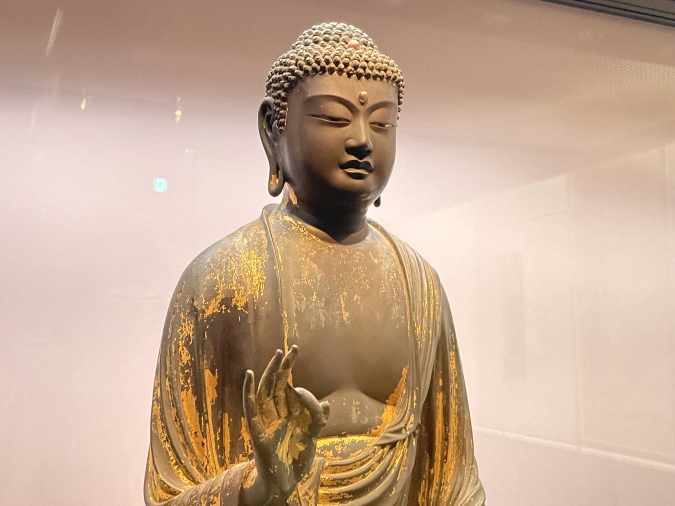
Therefore, although Shaka Nyorai and Yakushi Nyorai have similar appearances, only Amida Nyorai makes a circle with his fingers and makes a hand gesture similar to the "OK sign."

My recommendation from among the exhibits this time is the "Standing Statue of Amida Nyorai," an Important Cultural Property created to mark the first anniversary of Honen's death. Its sharp, intellectual expression is very cool.

Honen and the Pure Land

Image: Mr. tsubaking *Important Cultural Property "Standing Statue of Amida Nyorai" Kamakura period, Jodo Sect Collection

If you get closer, you can see that the fingers are also intricately carved, and you can see what looks like webbed feet between the fingers. This is said to represent Amida Buddha's wish to "save everyone without exception"!

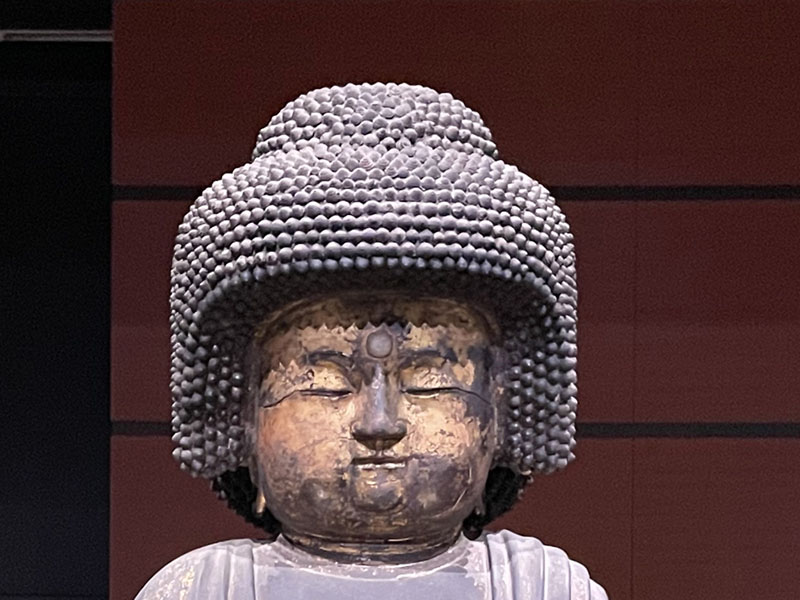
A cute Buddha statue with an afro: "Five-Kalpa Thinking Amida Buddha Seated Statue"

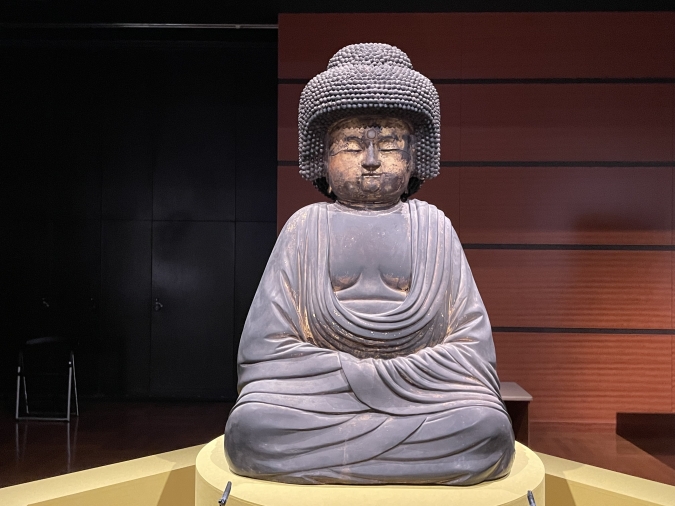
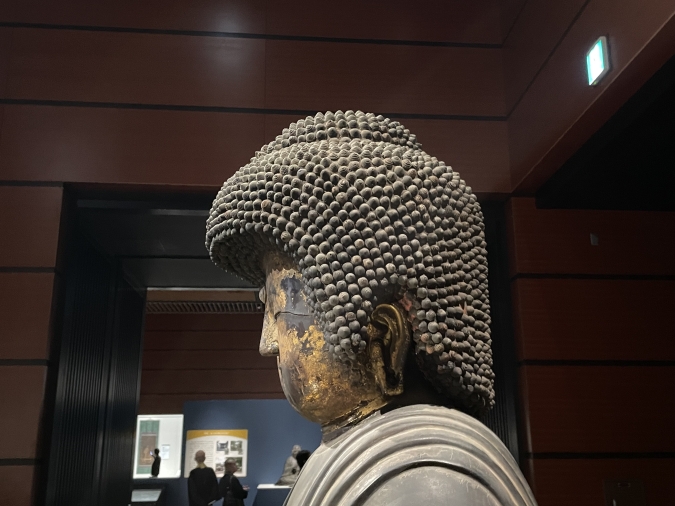
One of the highlights of the exhibition is the "Five-Kalpa Meditation Amida Buddha Seated Statue." With its afro-like hairstyle and youthful expression, it's bursting with cuteness and individuality!

Honen and the Pure Land: Five Kalpas of Contemplation

Image: Mr.tsubaking *Important Cultural Property “Gokal Thoughts Amitabha Tathagata Seated Statue” Kamakura period, Gokoin

Amida Buddha meditated and pondered (contemplated) "How can I save all people?" for an incredibly long period of time, "five kalpas."

One kalpa is the time it takes for a celestial maiden to descend from the sky once every 100 years and stroke a rock 160 kilometers square with her feather robe, until the rock is worn away and no longer exists; five times that amount is five kalpas.

This may seem a bit too fantastical, but for an unimaginably long time, Amida Buddha pondered how to save people.

The imagination used to express the length of time by the hair growing is also interesting.

The afro looks even more impressive when viewed from the side!

Honen and the Pure Land: Five Kalpas of Meditation and Hairstyle

Image: Mr.tsubaking

"Mikaeri Amida" who saved a woman fleeing from enemies

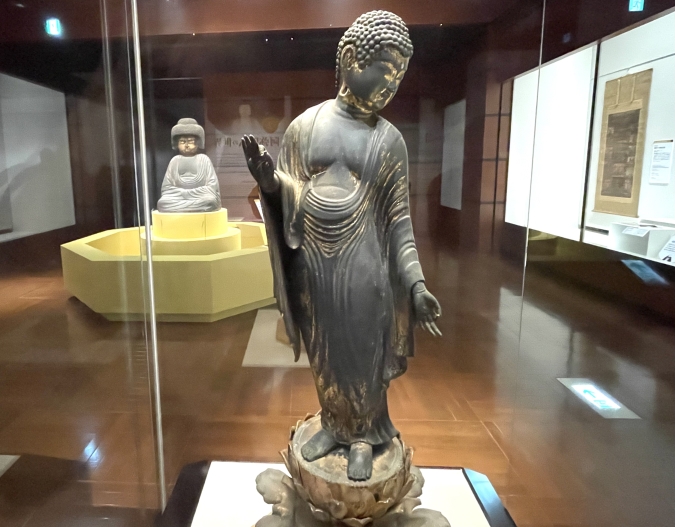
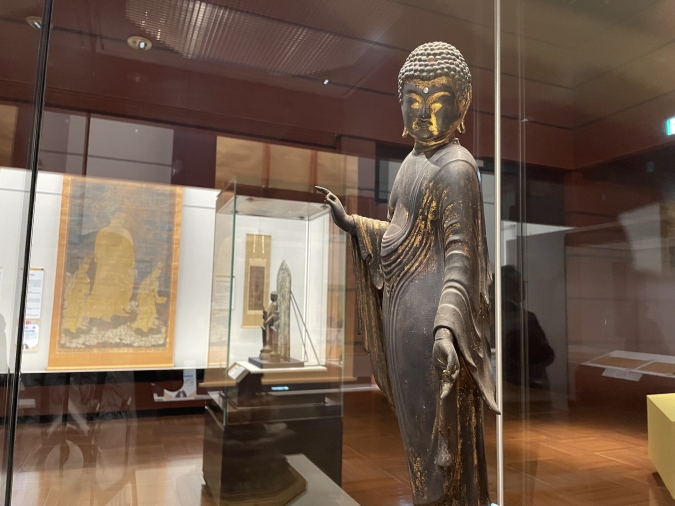
The highlight of the museum, which pairs with the "Five-Kalpa Contemplation Amida Seated Statue," is the "Standing Amida Statue," commonly known as "Looking Back Amida."

As its nickname suggests, the way it twists its body and looks back is very impactful!

Honen and the Pure Land: Looking back at Amida Buddha

Image: Mr. tsubaking *"Standing Statue of Amida Buddha" Kamakura period, Zenkoji Temple (Yamagata)

The following anecdote is told about this:

During the Genpei War, a woman from a clan that had been defeated by Minamoto no Yoritomo was discovered by pursuers while fleeing with her precious statue of Amida Buddha on her back.

However, Amida Buddha on her back turned around and drove off the pursuers, allowing the woman to escape safely.

Honen and the Pure Land: Amida Buddha with a Back View

Image: Mr.tsubaking

This anecdote is interesting, but despite the unique pose, the sculpture remains flawless when viewed from any angle, including the side or back, and the movement of the statue looking back gives it a sense of storytelling, giving us a glimpse of the high level of skill of the sculptor who carved this piece.

What is paradise like?

What kind of place is the Pure Land that Amida Buddha takes us to after death?

This has been recorded in sutras since ancient times, but in times when many people were illiterate, the common people were not aware of it.

At that time, the mandala was created to visually express the Pure Land.

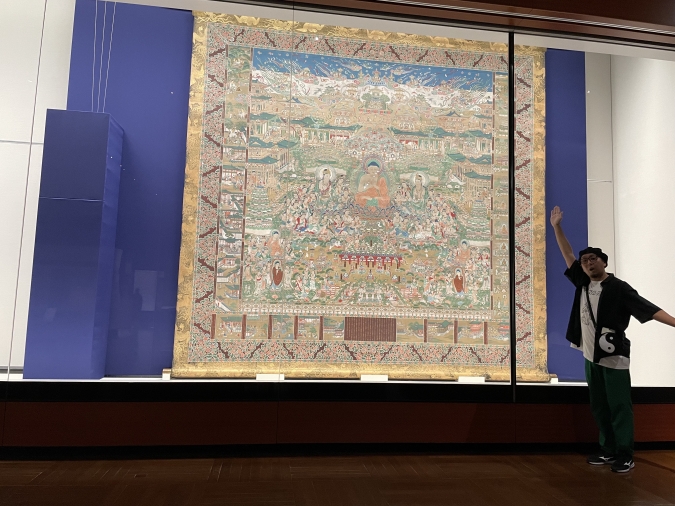
From October 7th to November 9th (Sunday), the "Tohma Mandala (Jokyo version)" (Important Cultural Property), a full-size replica painted during the Edo period, will be on display.

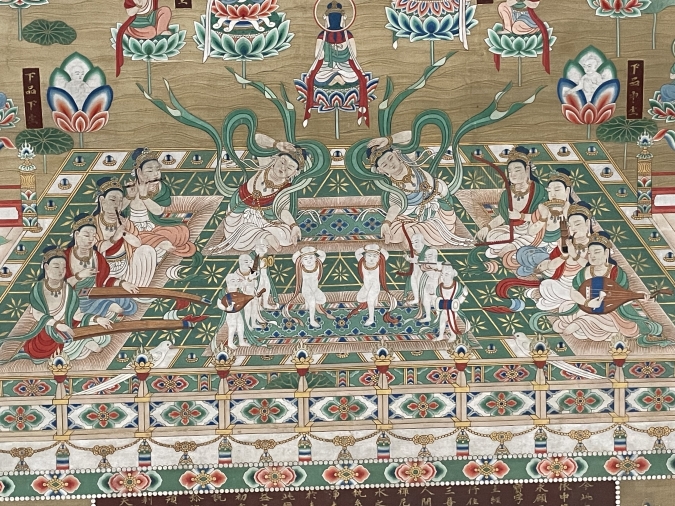
Beautiful flowers bloom, colorful birds dance, and Buddhas sing and dance joyfully; it's a world full of happiness that can truly be called "paradise"!

Honen and the Pure Land: Taima Mandala (detail)

Image: Mr. tsubaking *Important Cultural Property "Taima Mandala (Jokyo version)" (detail) Edo period, Taima-dera Temple

The most impressive thing is its size! It is this big even compared to me, who is 184 cm tall.

Honen and the Pure Land Mandala

Image: Mr. tsubaking *Important Cultural Property "Taima Mandala (Jokyo version)" Edo period, Taima Temple

When I saw it, I couldn't help but exclaim, "It's huge..."

Also, if you look closely at the details, you will see detailed depictions of paradise in various places, so you will never get bored of looking at it!

From Tuesday, November 11th to Sunday, November 30th, the National Treasure "Tsuzureori Taima Mandala," also a rite of passage at Taimadera Temple, will be on display. This is its first time in Kyushu! Don't miss out on this miraculous hidden Buddha statue, said to be woven from lotus threads!

There are lots of things to see, including cute statues and majestic statues!

Even up to this point, you can probably see how rich this exhibition is, but there's more to see!

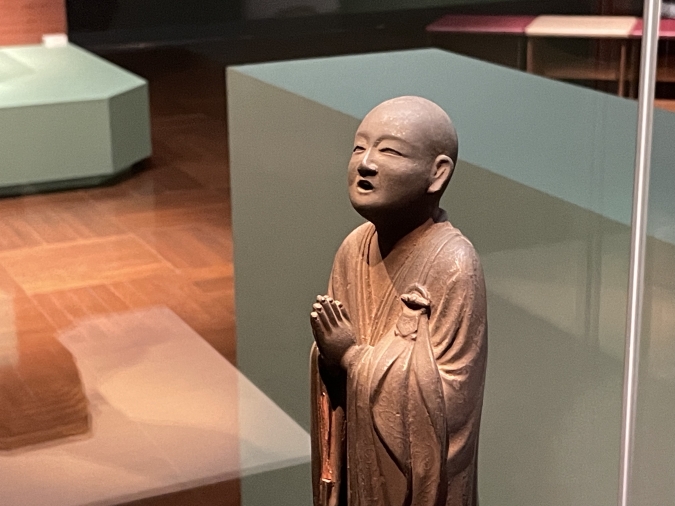
Standing statue of Master Zendo

The statue of Master Zendo is the principal image of Zendo-ji Temple in Hakata Ward, Fukuoka City. Its slightly open mouth and childlike expression are incredibly cute.

Honen and the Pure Land, Collection of Master Zendo

Image: Mr. tsubaking *"Standing Statue of Master Zendo" Kamakura Period, Zendo-ji Temple

Zendo was a high priest who spread Pure Land Buddhism in China. This statue shows Zendo looking up at the sky and chanting the Nembutsu.

Honen had a deep respect for Zendo, and it is said that after reading his writings he gained the confidence to embark on the path of chanting the name of Amida Butsu (repeatedly chanting Namu Amida Butsu).

Seated statue of Tokugawa Ieyasu

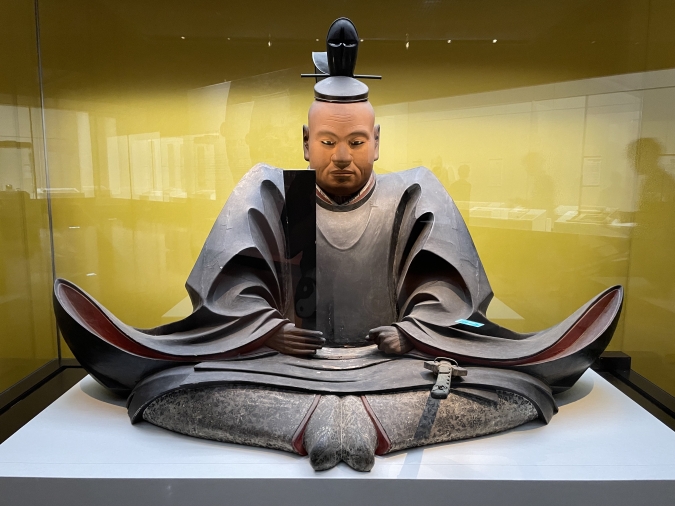
The "Seated Statue of Tokugawa Ieyasu," which is housed at Chion-in Temple (Kyoto City), the head temple of the Jodo sect of Buddhism, will also be on display at this special exhibition.

Honen and the Pure Land: Tokugawa Ieyasu

Image: Mr. tsubaking *Important Cultural Property "Seated Statue of Tokugawa Ieyasu" Edo Period, Chion-in Temple

During the Edo period, the Tokugawa family temple was Zojoji Temple, a temple of the Jodo sect. As a result, the Tokugawa family graveyard is still located at Zojoji Temple, where several shoguns are buried.

In particular, the first shogun, Tokugawa Ieyasu, was a devout believer in the Jodo sect and had deep ties with the temple.

This "Seated Tokugawa Ieyasu Statue" is not only life-size, but also has sleeves that flare out to the left and right, conveying Ieyasu's dignified presence.

The reason why the statue seems so full of life is due to its eyes. These are not simply wooden carvings, but crystals are set into the eyes and Japanese paper with an eye design is pasted on the back. This is a technique called "jelly eyes" that has been seen in Buddhist statues since the Kamakura period, and it is this that gives the eyes their sparkle.

There are also exciting photo spots!

As a general rule, photography is prohibited in many museum and art gallery exhibits, especially in special exhibitions like this one, which feature many national treasures and important cultural properties.

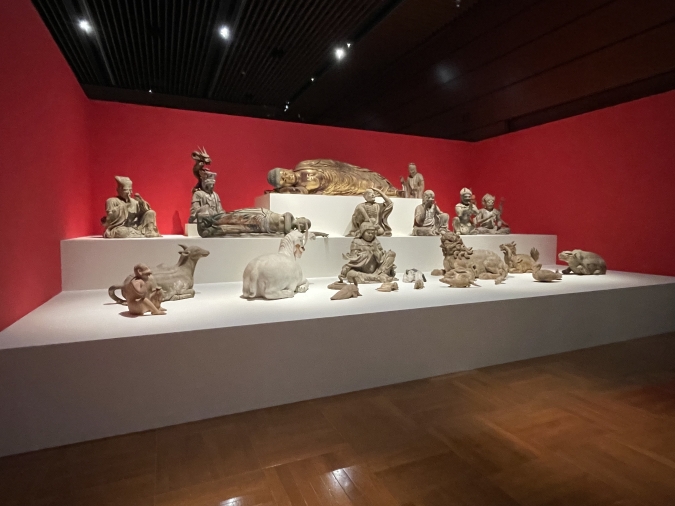
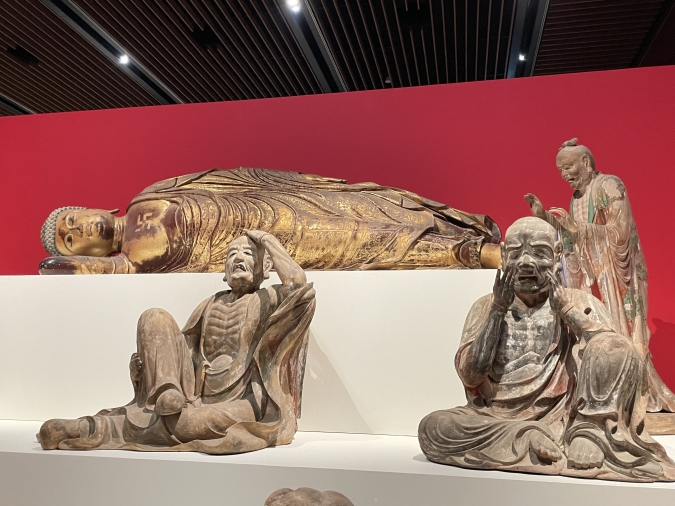
However, photography is permitted at the "Group of Buddha Nirvana Statues" exhibited at the end of the exhibition!

Honen and the Pure Land: Group of Buddha Nirvana Statues

Image: Mr. tsubaking * "Group of Buddha Nirvana Statues" Honenji Temple, Edo Period

Nirvana means "enlightenment," but it also means "death."

In other words, this group of statues depicts the moment when Buddha passed away. Pay attention to the expressions of the disciples, overflowing with grief!

Honen and the Pure Land: Group of Buddhas in Nirvana (detail)

Image: Mr.tsubaking

His disciples, other Buddhas, and even animals mourn his death.

The expressions of the disciples are so full of emotion that you can almost hear them crying, and you'll find yourself taking lots of photos!

The animals are also so cute that you'll want to use them as your smartphone wallpaper!

The merchandise section is also well-stocked

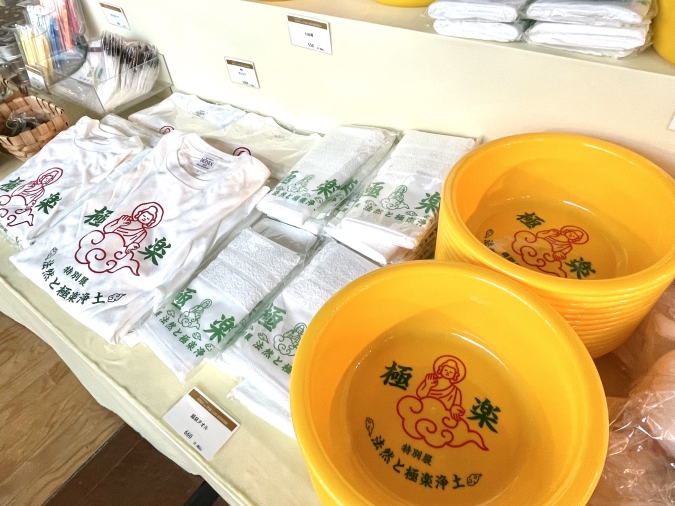
Once you've finished the highly satisfying exhibit, the merchandise area awaits.

From Buddha statue acrylic stands to T-shirts and sauna goods with the word "paradise" on them, you're sure to spend a fortune!

Honen and the Pure Land Goods

Image: Mr.tsubaking

There are also lots of other fun features in the surrounding area, such as a signboard where you can pretend to be the Goko Shiyui Seated Statue! The exhibition is divided into two periods: the first period runs from October 7th (Tuesday) to November 3rd (Monday, national holiday), and the second period runs from November 5th (Wednesday) to the 30th (Sunday), and the exhibits will be changed during the period.

"Honen and the Pure Land" is a book that you can learn not through study but through intuitive inspiration. Please come and visit! (Text by Mr. tsubaking)

< Special Exhibition "Honen and the Pure Land" Overview >
Date: October 7th (Tuesday) – November 30th (Sunday), 2025
Venue: Kyushu National Museum (4-7-2 Ishizaka, Dazaifu City, Fukuoka Prefecture)
Opening hours: Sunday, Tuesday to Thursday 9:30-17:00, Friday and Saturday 9:30-20:00 *Last admission 30 minutes before closing
Closed: Mondays *However, open on October 13th (Monday, national holiday), November 3rd (Monday, national holiday), and November 24th (Monday, holiday), but closed on October 14th (Tuesday), November 4th (Tuesday), and November 25th (Tuesday)
Admission fees: Adults = 2,000 yen, high school and university students = 1,200 yen, junior high school students and younger = free. *Permanent exhibitions can also be viewed. *University students and younger must bring their student ID or student handbook.

*This article contains information current at the time of publication.
* Any secondary use of the content of this site (images, text, etc.) such as duplication, reproduction, diversion, modification, etc. without permission is strictly prohibited. If found to be in violation, legal action may be taken.

【reference image】
※Text and images:Mr. Tsubaking

#go out Check them all out!
#Shrines and temples #Dazaifu
⇒【NEW】Click here for the latest information on Fukuoka

<Other articles you may like>
[Fukuoka Prefecture] 25 Stunning Autumn Foliage Spots
[Konmari's] Plan to declutter your home before the end of the year <1>
[Updated every Wednesday] Evelourdes Haruka's 12 Zodiac Signs